The cosmetic product notification portal (CPNP) is an important part of cosmetic product compliance in the European Union (EU). Businesses that manufacture, import, or sell cosmetics in European markets need to understand how product notification works before placing their products on the market. From skincare creams and facial serums to shampoos, perfumes, and makeup, the correct notification process helps authorities identify products and access essential safety information.
For cosmetic brands in the United Kingdom (UK), understanding this system is also important because Brexit changed the regulatory requirements for selling cosmetics in Great Britain and Northern Ireland. Although some requirements overlap, businesses must not assume that one notification covers every market. Companies like Cosmetic Safety Pro can support businesses seeking guidance on cosmetic product safety and regulatory documentation.
What Is the Cosmetic Product Notification Portal (CPNP)?
The cosmetic product notification portal (CPNP) is an online notification system established by the European Commission under the EU Cosmetics Regulation, Regulation (EC) No 1223/2009. It allows responsible persons to submit specified information about cosmetic products before placing them on the EU market.
The portal helps relevant authorities and poison centres access product information when needed. It is not a product approval system, and submitting a notification does not mean that a cosmetic product has been officially certified as safe. Under EU rules, cosmetic products must meet applicable safety, composition, labelling, and documentation requirements. The notification process forms one part of this wider compliance framework.
Businesses should understand that notifying a product and demonstrating its legal compliance are separate responsibilities. A company may successfully submit a notification but still face compliance issues if its product lacks a suitable safety assessment, contains prohibited ingredients, or has incorrect labelling.
Why Is the CPNP Important for Cosmetic Businesses?
The cosmetic product notification portal (CPNP) supports the regulatory monitoring of cosmetics sold throughout the EU. By collecting product details in a central system, it helps authorities identify products and obtain information relevant to consumer safety.
For businesses, notification is a necessary step before placing covered cosmetic products on the EU market. Completing it correctly can also help reduce avoidable administrative problems and improve internal compliance processes. The system is particularly relevant to businesses selling:
- Facial cleansers, moisturisers, and serums
- Body lotions, hand creams, and body washes
- Shampoos, conditioners, and hair styling products
- Makeup, foundations, lipsticks, and mascaras
- Perfumes, deodorants, and body sprays
- Nail care products and other cosmetic preparations
Each product must be assessed according to its intended purpose, formulation, and applicable legal requirements. A product marketed for cosmetic purposes may be subject to different rules from a medicinal product or another regulated category.
For example, a moisturiser intended to soften dry skin is generally treated as a cosmetic product. However, products making medicinal claims may require a different regulatory assessment. Businesses should establish the correct classification before preparing their notification.
How Does the Cosmetic Product Notification Portal Work?
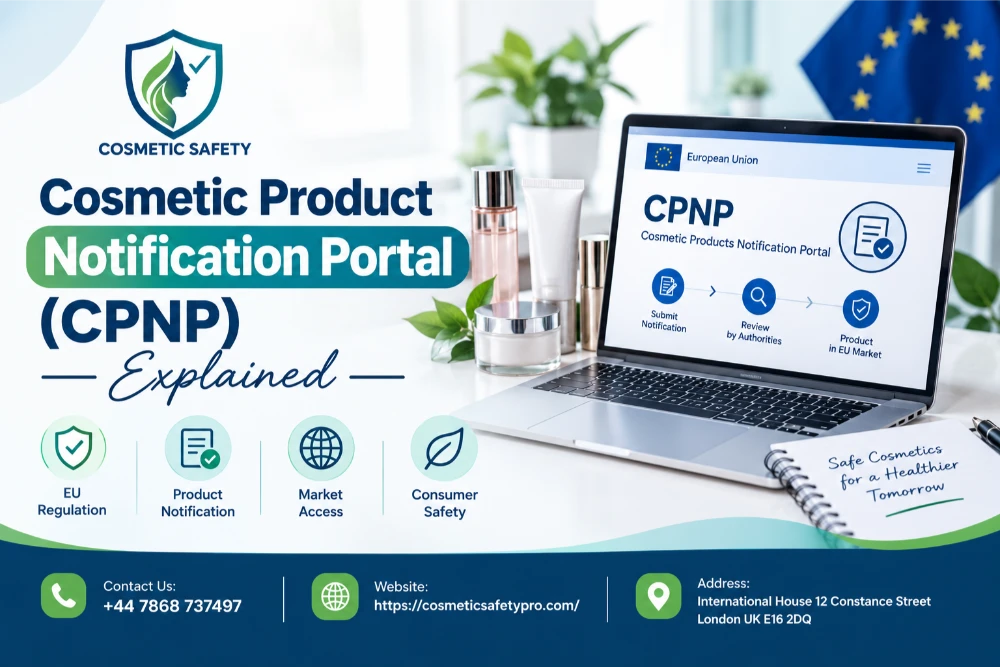
The cosmetic product notification portal (CPNP) allows an authorised responsible person or an eligible representative to enter product information into the European Commission’s online system. The process should be completed before the cosmetic product is first placed on the EU market. The portal is free to use, but businesses may still need to pay for professional services such as safety assessments, regulatory advice, laboratory testing, or preparation of product documentation. The general process involves the following steps:
Step No. 1: Confirm the product classification. Establish whether the item falls under the legal definition of a cosmetic product.
Step No. 2: Identify the responsible person. Confirm who holds legal responsibility for compliance in the relevant market.
Step No. 3: Prepare the documentation. Gather the product name, category, ingredient information, packaging details, and other required data.
Step No. 4: Complete the notification. Enter the relevant details into the appropriate portal and check them for accuracy.
Step No. 5: Retain compliance records. Keep the product documentation updated and ensure the required safety and labelling obligations are met.
These steps provide a practical overview rather than a substitute for the official portal instructions. Additional requirements may apply to products containing nanomaterials or products with specific formulation characteristics.
Who Needs to Use the CPNP?
The cosmetic product notification portal (CPNP) is primarily intended for responsible persons placing cosmetics on the EU market. Certain distributors also have notification obligations in specific circumstances, such as when they translate product labelling on their own initiative to comply with national requirements.
A responsible person may be a manufacturer, importer, or another eligible person or business formally designated to carry out the relevant duties. The exact arrangements depend on the product’s supply chain and the market in which it will be sold. Businesses that may need to consider notification include:
- Cosmetic manufacturers developing their own skincare or haircare ranges.
- Importers bringing cosmetics into the EU from countries outside the EU.
- Private-label brands selling products under their own names.
- Online retailers and distributors with specific legal responsibilities.
- International brands entering European markets for the first time.
The responsible person must ensure that the product complies with applicable EU cosmetic rules. Businesses should confirm their individual responsibilities before launching a product rather than relying solely on a supplier’s statement that it is compliant.
What Information Is Required for CPNP Notification?
Preparing complete and accurate information is an essential part of the notification process. The cosmetic product notification portal (CPNP) collects information that helps authorities identify cosmetic products and access relevant details when necessary. Depending on the product and applicable requirements, the notification process can involve:
- The cosmetic product’s category and name.
- The responsible person’s name and address.
- The country of origin for imported products, where required.
- The Member State where the product is first placed on the market.
- Contact information for an appropriate person in an emergency.
- Details about the presence of nanomaterials, where applicable.
- Information about relevant substances and the product’s formulation.
- The original labelling and packaging information, including images where required.
- The product formulation information needed for identification and regulatory purposes.
Businesses should use the official European Commission guidance to confirm the precise fields required for their product. The information requested may differ according to the product type and notification circumstances. Before submitting details, check that the product name, ingredient information, and packaging are consistent across the relevant records. Incorrect or incomplete data can create avoidable administrative work and may complicate future compliance checks.
Is CPNP Notification the Same as Cosmetic Product Approval?
No. Notification and approval are different concepts. The cosmetic product notification portal (CPNP) is a reporting system, not a government certification scheme that guarantees a product’s safety or quality. A successful submission does not mean that authorities have tested the formulation, approved every marketing claim, or confirmed that all legal requirements have been met.
Before selling cosmetics in the EU, businesses must also meet other obligations under Regulation (EC) No 1223/2009. These include:
- Ensuring the product is safe under normal or reasonably foreseeable conditions of use.
- Having a suitable Cosmetic Product Safety Report (CPSR).
- Maintaining a Product Information File (PIF).
- Using ingredients that comply with applicable restrictions and prohibitions.
- Following cosmetic labelling and claims requirements.
- Appointing an eligible responsible person.
- Complying with applicable manufacturing and good manufacturing practice requirements.
The Product Information File must be available to the competent authority at the address of the responsible person and must be kept up to date. These duties remain important even after notification has been completed.
How Cosmetic Safety Pro Supports Your Compliance Journey?
Entering the European cosmetics market can involve several connected responsibilities. Businesses may need help understanding their product classification, preparing safety documentation, reviewing labels, and identifying the correct notification route.
Cosmetic Safety Pro can be a useful point of contact for businesses seeking support with cosmetic regulatory compliance, including Cosmetic Product Safety Reports, Product Information Files, and labelling and ingredient reviews. The precise service required will depend on the product, its formulation, and the markets where it will be sold. Before launching a cosmetic product, businesses should consider the following practical steps:
- Confirm the intended market, whether the EU, Great Britain, or Northern Ireland.
- Identify the responsible person and clarify their legal duties.
- Arrange the required safety assessment with an appropriately qualified assessor.
- Prepare the product information and check that the label meets local requirements.
- Complete the applicable notification process and retain supporting records.
- Review the documentation whenever a relevant product or regulatory change occurs.
Taking these steps early can help businesses avoid preventable mistakes and prepare a more organised route to market. However, the responsible person remains accountable for meeting the legal obligations that apply to the product.
Final Thoughts
The cosmetic product notification portal (CPNP) plays an important role in the EU’s cosmetic regulatory framework. It enables responsible persons to provide essential product information to the European Commission before a cosmetic product is placed on the EU market. However, notification is only one part of compliance.
Businesses must also consider product safety assessments, ingredient restrictions, labelling, responsible-person arrangements, and the maintenance of supporting records. Companies selling in both the EU and UK should pay particular attention to the different requirements for Great Britain and Northern Ireland.
With suitable preparation and professional guidance where needed, cosmetic brands can build a clearer compliance process and reduce the risk of avoidable regulatory problems. Cosmetic Safety Pro can help businesses explore the documentation and compliance support they may need before entering the UK and EU cosmetics markets.
Frequently Asked Questions
What does CPNP stand for?
CPNP stands for Cosmetic Products Notification Portal. It is the European Commission’s online system for notifying cosmetic products placed on the EU market.
Is Cosmetic Product Notification Portal notification free?
Yes. The official EU notification portal is free to use. However, businesses may incur costs for safety assessments, regulatory advice, testing, and documentation preparation.
Is CPNP required before selling cosmetics in the EU?
Of course, the responsible person must submit the required notification before placing a cosmetic product on the EU market, subject to the applicable rules.
Can I use Cosmetic Product Notification Portal for products sold in Great Britain?
No. Great Britain uses the separate SCPN service. Northern Ireland follows relevant EU cosmetic rules and uses CPNP.
Does CPNP notification mean my product is approved?
Notification is not product approval or certification. The business must still meet the applicable safety, ingredient, labelling, and documentation requirements.