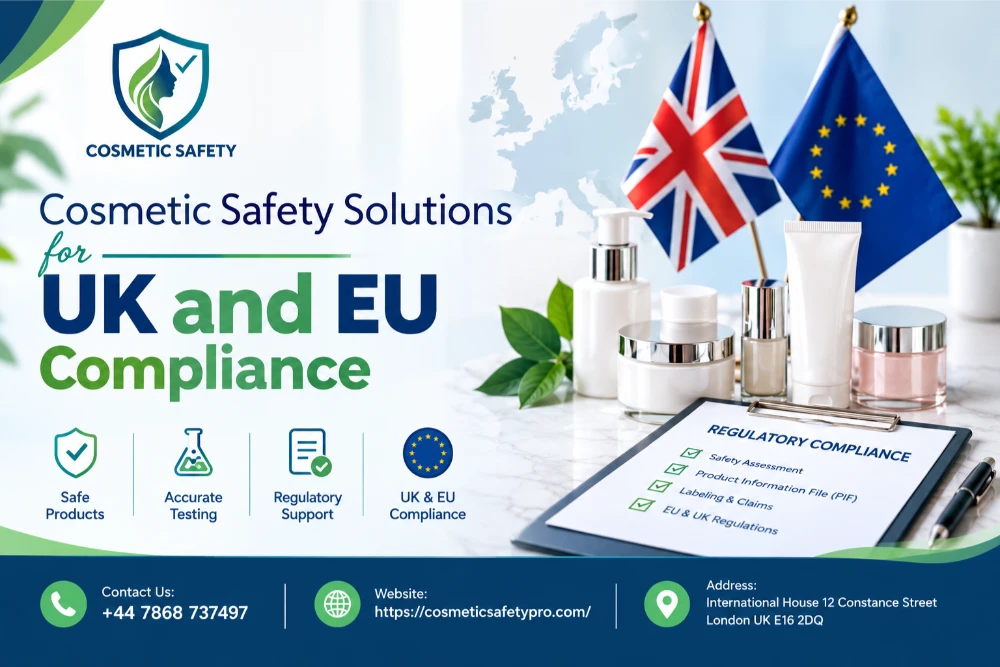
The beauty and personal care industry across Britain and the continent is booming, but growth brings scrutiny. Regulators in London, Brussels, Dublin, and Berlin are tightening their watch over what goes into the jars, tubes, and bottles that consumers use every day. For any brand owner, formulator, or importer operating in this space, understanding cosmetic safety solutions is no longer optional. It is the foundation of a viable business. Whether you are a small indie brand launching from a kitchen in Manchester or an established manufacturer distributing across Paris, Milan, and Warsaw, compliance is the ticket to market access.
Why Cosmetic Safety Solutions Has Become A Business Priority?
Ten years ago, many small cosmetic brands treated safety paperwork as a box-ticking exercise. That attitude no longer survives contact with modern enforcement. Trading Standards officers in the UK and market surveillance authorities across EU member states now routinely pull products from shelves and online marketplaces for spot checks. A single missing Cosmetic Product Safety Report (CPSR) or an out-of-date Product Information File (PIF) can halt a product launch entirely.
Today, consumers are more discerning and better informed about the products they want. Shoppers in cities like London, Edinburgh, Amsterdam, and Barcelona read ingredient labels and check for cruelty-free cosmetic certification. They are asking brands directly about allergen disclosure. This shift means that cosmetic regulatory compliance is not just a legal shield but a genuine competitive advantage. Brands that can demonstrate rigorous safety practices earn trust faster and retain customers longer.
Understanding the UK and EU Regulatory Landscape:
When we talk about cosmetic safety solutions, we’re talking about two regulatory frameworks. This dual system creates real headaches for brands that want to sell on both sides of the Channel.
- The EU Cosmetics Regulation (EC) No 1223/2009 governs products sold across all EU member states, from Ireland to Bulgaria.
- The UK Cosmetics Regulation, retained and adapted after Brexit, applies specifically to England, Scotland, Wales, and Northern Ireland (with Northern Ireland following a slightly different arrangement under the Windsor Framework).
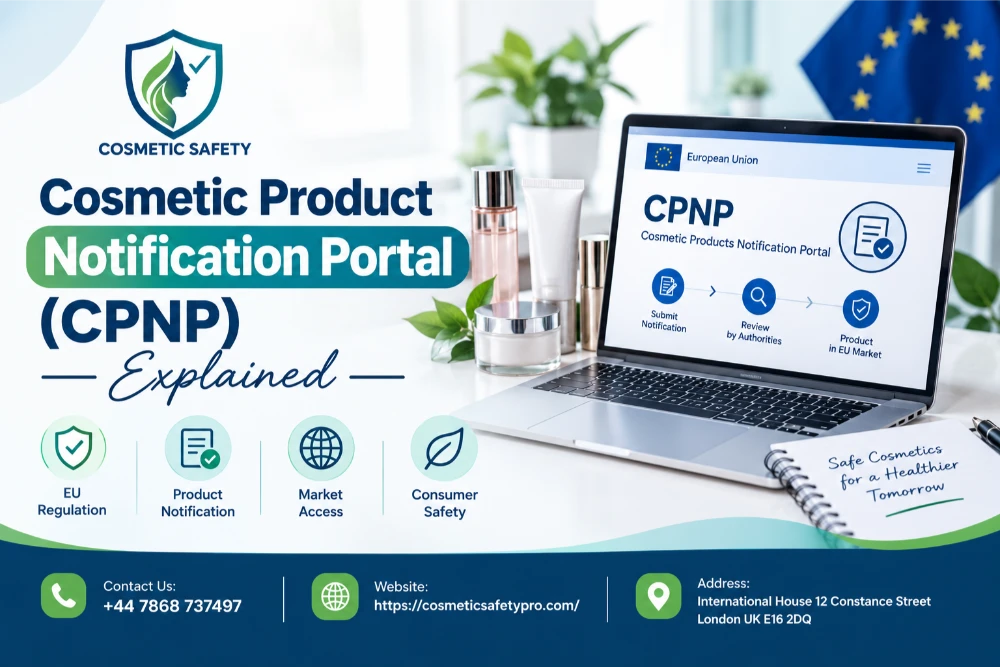
Both frameworks require a Responsible Person for cosmetics to be appointed for the UK market, with one based in the UK and another based in the EU for the European market. Products must be notified through the correct portal: the UK SCPN (Submit Cosmetic Product Notification) system for Britain, and the EU CPNP (Cosmetic Products Notification Portal) for the European Union.
This means a brand headquartered in Birmingham but selling into Germany, France, and the Netherlands needs two separate Responsible Persons and two separate notification pathways. Getting this wrong is one of the most common and costly mistakes new brands make.
Core Elements of cosmetic safety solutions:
Navigating cosmetic safety compliance involves several interlocking components. Understanding each one individually makes the overall picture far less overwhelming.
-
Cosmetic Product Safety Assessment:
At the heart of every compliant product sits a Cosmetic Product Safety Assessment (CPSA), carried out by a qualified safety assessor. This assessment reviews the formulation, checks every ingredient against restricted and banned substance lists, evaluates the product’s intended use, and confirms it will not pose a health risk under normal or reasonably foreseeable conditions. Without this document, a product legally cannot be placed on the market in either the UK or the EU.
-
Product Information File (PIF):
In cosmetic safety solutions, the Product Information File is essentially the product’s full compliance dossier. It must be readily accessible and typically includes:
- The product description and formulation
- The safety report prepared by the assessor
- Manufacturing method and GMP (Good Manufacturing Practice) declaration
- Proof of the claimed effect, where applicable
- Data on any animal testing (or lack thereof)
Authorities can request this file at any time, and a brand must be able to produce it without delay.
-
Ingredient and Allergen Labelling:
Correct cosmetic ingredient labeling protects both consumers and the brand. INCI (International Nomenclature of Cosmetic Ingredients) names must be listed accurately, and the 26 recognised fragrance allergens must be disclosed when present above threshold levels. Mislabelling, even unintentionally, can trigger product recalls and reputational damage that is difficult to undo.
-
Good Manufacturing Practice (GMP):
GMP for cosmetics, aligned with ISO 22716, governs everything from facility hygiene to staff training, raw material sourcing, and batch record-keeping. A manufacturer that cannot demonstrate GMP adherence will struggle to pass audits or satisfy retail partners, particularly larger UK and EU chains that demand documented proof before stocking a product.
Common Compliance Pitfalls Brands Should Avoid:
Many cosmetic businesses, especially those scaling quickly, stumble over avoidable mistakes. Knowing these pitfalls in advance can save significant time, money, and legal exposure.
- Launching a product without a completed CPSR because timelines were rushed
- Assuming that UK notification automatically covers EU sales, or vice versa
- Overlooking restricted ingredient updates, since banned substance lists are revised regularly
- Using vague or unsupported marketing claims, such as “clinically proven,” without the data to back it up
- Failing to update the safety file after a formulation change, however minor it may seem
- Ignoring packaging and labelling requirements specific to each target country, including language requirements in markets like France and Italy
Each of these errors can result in enforcement action, product withdrawal, or costly delays to market entry. The only need is cosmetic safety solutions to protect your brand.
How Professional Safety Solutions Simplify the Process?
This is precisely where dedicated cosmetic safety solutions earn their value. Instead of a brand owner trying to interpret dense regulatory text alone, a specialist partner manages the technical and administrative burden end to end.
Cosmetic Safety Pro works with formulators, indie beauty brands, and larger manufacturers to handle the full compliance journey. From ingredient review and safety assessment through to Responsible Person appointment and portal notification across both UK and EU territories. This structured support lets brand founders focus on product development and growth, confident the regulatory side is handled correctly.
A trustworthy compliance partner typically supports a business through the following stages:
- Formulation review — checking ingredients against current restricted substance lists
- Safety assessment — commissioning or preparing the CPSR with a qualified assessor
- Documentation — compiling a complete and audit-ready PIF
- Notification — submitting to UK SCPN and/or EU CPNP as required
- Labelling review — ensuring INCI names, allergens, and claims meet legal standards
- Ongoing monitoring — tracking regulatory updates that may affect existing products
This structured approach reduces risk substantially and shortens the time it takes for a new product to move from concept to shelf.
Why Local Market Knowledge Matters?
Cosmetic safety solutions are not identical everywhere, even within the EU’s harmonised framework. Enforcement intensity, language requirements, and how certain rules are interpreted can vary between countries. A product destined for Spain may need different language labelling than one sold in Sweden. A brand distributing through retailers in Dublin might face different documentation checks than one selling direct-to-consumer in Rotterdam.
This is why working with a partner who understands both UK cosmetic regulations and the nuances across individual EU member states, from Poland to Portugal, is so valuable. Local market knowledge prevents small, avoidable errors that can stall a launch or trigger a customs hold.
Building Consumer Trust Through Transparency:
Beyond legal necessity, cosmetic safety compliance has become a genuine trust signal. Brands that openly communicate their commitment to safe cosmetic products do so through clear labeling, honest claims, and visible certification. This builds stronger, longer-lasting customer relationships. In an era where a single viral complaint about an undisclosed allergen can damage a brand overnight, proactive safety management is good business sense.
Consumers across the UK and EU increasingly reward brands that take this seriously. Demonstrating rigorous product safety assurance is quickly becoming as important to purchasing decisions as price or packaging design.
Final Thoughts:
The regulatory environment for cosmetics in the UK and EU will continue to evolve, particularly as new ingredient research emerges and consumer expectations shift. Brands that treat compliance as an ongoing discipline, rather than a one-time hurdle, will be far better positioned to grow sustainably across both markets. Getting cosmetic safety solutions and partnering with experienced specialists such as Cosmetic Safety Pro gives brands the technical expertise and administrative support they need. They handle every complexity with confidence, allowing brands to focus on what they do best: creating products people love and trust.
Frequently Asked Questions:
Do I need separate Responsible Persons for the UK and EU markets?
Yes. A UK-based Responsible Person is required for products sold in Great Britain, and a separate EU-based Responsible Person is required for products sold within the European Union.
What is a Cosmetic Product Safety Report (CPSR)?
A formal safety document prepared by a qualified assessor, confirming that a cosmetic product is safe for its intended use under both the UK and EU regulatory frameworks.
How often should a Product Information File be updated while hiring cosmetic safety solutions?
Review and update the PIF whenever there is a formulation change, a new safety finding, or a change in regulatory requirements affecting the ingredients used.
Can I sell the same product formulation in both the UK and EU without changes?
Often yes, but each market requires its own notification, labelling review, and Responsible Person, even if the formulation itself remains unchanged.
What happens if my product is found non-compliant after launch?
Authorities can require immediate withdrawal from sale and, in some cases, issue penalties. This is why proactive compliance support before launch is far less costly than reactive correction afterward.