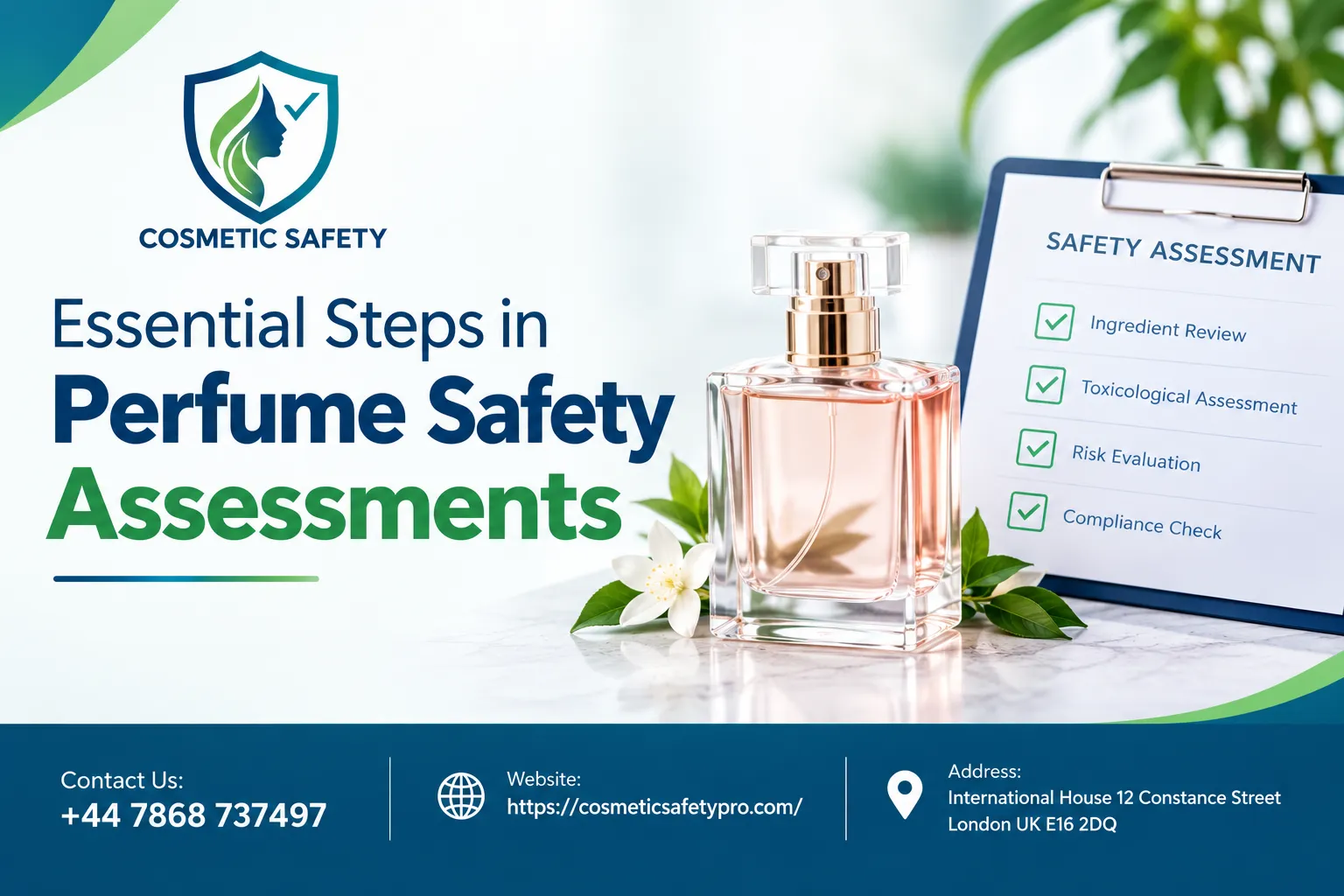
A Perfume CPSR evaluates a fragrance product’s formulation, ingredient concentrations, exposure levels, toxicological information, and intended use. It helps determine whether the finished perfume is safe for consumers and suitable for sale in the intended market.
In 2026–27, perfume businesses operating in the United Kingdom and European Union must pay particular attention to fragrance allergen labelling, updated regulatory requirements, ingredient restrictions, and product documentation. Understanding these requirements can help businesses avoid compliance problems and prepare their products for the market.
What Is Perfume CPSR?
A Cosmetic Product Safety Report (CPSR) is a mandatory scientific document required under cosmetic product legislation. It demonstrates that a finished cosmetic product is safe for human health when used according to its intended purpose and under normal or reasonably foreseeable conditions.
Perfumes often contain alcohol, fragrance oils, aromatic compounds, and sometimes water or other formulation ingredients. Each component must be considered during the safety assessment because its concentration and properties can influence the overall safety of the finished product. A Perfume CPSR is prepared specifically for fragrance products, including eau de parfum, eau de toilette, cologne, body mists, and other cosmetic fragrances. Although these products may share similar ingredients, their safety assessments depend on their individual formulations, concentrations, packaging, and application methods.
The report is divided into two main parts:
Part A: Cosmetic Product Safety Information:
It contains the scientific and technical information needed to evaluate the Perfume CPSR. It includes:
- Quantitative and qualitative composition: A complete list of ingredients, their concentrations, chemical identities, and functions.
- Physical and chemical characteristics: Information about the properties of the finished perfume and its ingredients.
- Stability information: Evidence that the product remains suitable throughout its intended shelf life.
- Microbiological quality: Relevant information about the microbiological characteristics of the product and its ingredients.
- Impurities and traces: Details of impurities, prohibited substances, and relevant traces of restricted ingredients.
- Packaging material: Information about the packaging and its potential interaction with the perfume.
- Normal and reasonably foreseeable use: Details about how consumers are expected to apply and use the fragrance.
- Exposure assessment: Information about the amount of product used, frequency of application, and potential exposure to individual ingredients.
- Toxicological profiles: Scientific information about the safety characteristics of the ingredients.
- Undesirable effects: Available information about undesirable effects and serious undesirable effects associated with the product.
Part B: Cosmetic Product Safety Assessment:
It provides the safety assessor’s professional conclusion based on the information presented in Part A. It includes:
- Safety conclusion: Whether the finished perfume is considered safe for its intended use or requires specific restrictions.
- Warnings and instructions: Any necessary precautions, application instructions, and mandatory warnings.
- Scientific reasoning: An explanation of how the available evidence supports the safety conclusion.
- Safety assessor credentials: The name, qualifications, signature, and date of the person responsible for the assessment.
A qualified safety assessor must complete and sign Part B. The responsible person must ensure that the report is accurate, complete, and kept up to date.
Why Is Perfume Safety Assessment Important in 2026–27?
A Perfume CPSR helps businesses identify potential safety concerns before their products reach consumers. It also provides documented evidence that the finished formulation has undergone an appropriate scientific assessment. Several factors make perfume safety assessment particularly important in 2026–27.
Increasing Attention to Fragrance Allergens:
Fragrance allergens are among the important considerations in cosmetic safety. Certain aromatic substances can cause allergic contact dermatitis, particularly in people who have already become sensitised. Some consumers may experience redness, itching, inflammation, or skin irritation after exposure to specific fragrance ingredients. These reactions make accurate ingredient identification and appropriate allergen labelling essential.
The European Union has introduced expanded fragrance allergen labelling requirements through Commission Regulation (EU) 2023/1545. This amendment adds 56 additional fragrance allergens to the individual labelling requirements and updates existing entries. The requirements apply when the concentration of a listed allergen exceeds:
- 001% in leave-on cosmetic products.
- 01% in rinse-off cosmetic products.
Perfumes are generally leave-on products because they remain on the skin after application. Therefore, the lower threshold is particularly important when reviewing fragrance allergen concentrations in perfume formulations.
Compliance With Changing Cosmetic Regulations:
Cosmetic regulations establish requirements for product safety, ingredient restrictions, labelling, and documentation. Businesses must understand the applicable rules before introducing a new perfume or modifying an existing formulation.
A Perfume CPSR supports compliance by documenting the finished product’s scientific assessment. However, having a safety report alone does not automatically make a perfume compliant. The complete product must meet all applicable legal requirements, including ingredient restrictions and labelling obligations.
Consumer Protection and Product Confidence:
Consumers increasingly pay attention to fragrance ingredients, product information, and potential allergens. Clear ingredient labelling helps people make informed purchasing decisions, particularly those with known sensitivities.
A properly assessed perfume also gives businesses greater confidence in their formulations. Identifying potential problems before commercial distribution can help reduce avoidable product safety issues and support responsible product development.
UK and EU Perfume Regulations: What Businesses Need to Know?
Businesses selling perfumes across the UK and EU must understand that these markets do not have completely identical regulatory arrangements. Although both frameworks are based on similar cosmetic safety principles, you must consider their legal requirements and regulatory updates separately.
United Kingdom Cosmetic Regulations:
In Great Britain, including England, Scotland, and Wales, cosmetic products are regulated under the retained and amended framework of Regulation (EC) No 1223/2009, together with the Cosmetic Products Enforcement Regulations 2013. Before a perfume is placed on the Great Britain market, the responsible person must ensure that:
- A suitable cosmetic safety assessment has been completed.
- A qualified safety assessor has signed the CPSR.
- A Product Information File (PIF) is maintained.
- The product complies with applicable ingredient restrictions.
- Required warnings and ingredient information appear on the packaging.
- The product has been notified through the relevant UK cosmetic product notification system.
- A UK-established responsible person is identified where required.
A Perfume CPSR must consider the finished fragrance formulation rather than relying only on the safety information supplied for individual fragrance oils. Businesses should also understand that Northern Ireland follows a different regulatory arrangement. EU cosmetic product rules continue to apply there under the relevant framework.
European Union Cosmetic Regulations:
The EU Cosmetics Regulation (EC) No 1223/2009 establishes the main legal requirements for cosmetic products sold across EU member states. A perfume business intending to sell products in Germany, France, Italy, Spain, the Netherlands, Ireland, or other EU countries must ensure that its products meet the applicable EU requirements. Important obligations include:
- Appointing an EU-based responsible person.
- Completing a compliant cosmetic safety assessment.
- Maintaining a Product Information File.
- Ensuring that restricted ingredients meet the applicable conditions.
- Providing accurate ingredient declarations.
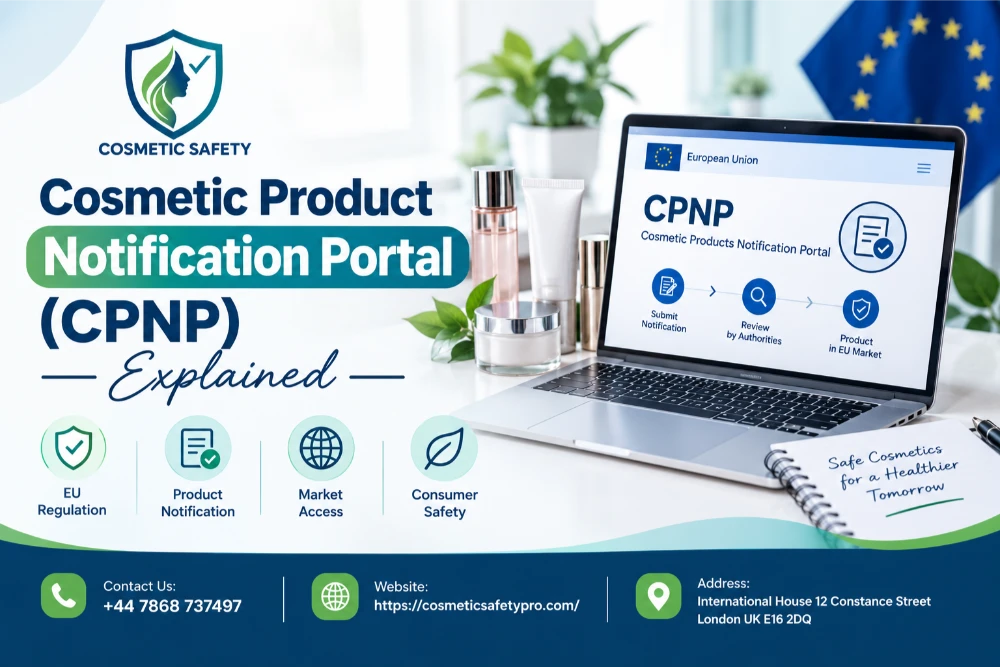
- Completing the required Cosmetic Products Notification Portal (CPNP) notification.
- Ensuring that product labels contain the necessary information in accordance with applicable rules.
The EU responsible person must ensure that the product complies with the relevant requirements before it is made available on the market.
How Cosmetic Safety Pro Supports Perfume Compliance?
Preparing accurate cosmetic safety documentation requires an understanding of fragrance ingredients, toxicological information, and applicable cosmetic regulations. Cosmetic Safety Pro provides cosmetic regulatory services, including perfume safety assessments, to help businesses understand and meet relevant UK and EU cosmetic requirements.
A properly prepared Perfume CPSR should reflect the finished fragrance’s actual composition rather than relying on general ingredient information. This is particularly important for brands introducing new perfumes, changing fragrance oils, or expanding into additional markets.
Cosmetic Safety Pro can support businesses through its perfume safety assessment service, helping them meet the documentation and safety requirements for their fragrance products. For perfume brands, maintaining accurate safety documentation is an important part of responsible product development and ongoing regulatory compliance.
Conclusion
Perfume CPSR is an essential consideration for businesses manufacturing, importing, or selling fragrances in the UK and European Union. As cosmetic regulations continue to develop, brands must pay close attention to ingredient restrictions, fragrance allergens, product labelling, and scientific safety assessments.
A Perfume CPSR provides the scientific evidence needed to demonstrate that a finished fragrance is safe for its intended cosmetic use. It evaluates the complete formulation, including alcohol, essential oils, synthetic fragrance compounds, allergens, and other ingredients.
Cosmetic Safety Pro helps prepare an accurate Perfume CPSR, maintain the Product Information File, and review relevant regulatory changes to help perfume businesses protect consumers and maintain compliance throughout the product lifecycle.
Frequently Asked Questions
What is a Perfume Cosmetic Product Safety Report?
A Perfume CPSR is a Cosmetic Product Safety Report that evaluates the safety of a finished fragrance product. It examines the formulation, ingredient concentrations, toxicological information, exposure levels, and potential safety concerns before the perfume is placed on the market.
Is a CPSR mandatory for selling perfumes in the UK and EU?
Yes. A cosmetic safety assessment is required before placing a perfume on the Great Britain or EU market. The assessment must be documented in a CPSR, and Part B must be completed and signed by a suitably qualified safety assessor.
What documents are required for a Perfume CPSR?
Commonly required documents include the complete product formulation, fragrance oil composition, allergen declaration, Safety Data Sheets, IFRA Certificate of Conformity, product specifications, relevant stability information, and packaging details.
What are the new EU fragrance allergen labelling requirements for 2026?
Regulation (EU) 2023/1545 introduces individual labelling requirements for 56 additional fragrance allergens and updates existing entries. The requirements apply when listed allergens exceed 0.001% in leave-on products or 0.01% in rinse-off products. Newly placed EU cosmetic products must comply from 31 July 2026.
Does an IFRA certificate replace a perfume CPSR?
No. An IFRA Certificate of Conformity provides information about fragrance-use restrictions under IFRA standards. It does not replace the legally required cosmetic safety assessment of the finished perfume. Each serves a different purpose in fragrance compliance.